
Read the latest news from campus: How campus units are collaborating to provide PPE for medical staff • UCLA researchers and global effort to test therapies • A summary of the "CARES Act" Congress signed into law and Gift Planning news. read more
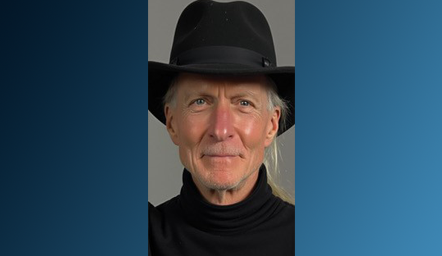
David Storrs
"I did the math, and giving the property to UCLA was a no-brainer. They sold it, and the arrangement provided me with a charitable deduction for several years after I made the gift and with significant overall tax savings. The income I receive tends to track inflation and surpasses the revenue I would have gotten from the property, and no management hassle.
~David Storrs
Donor Story
At the Crossroads of Music and Technology
David Storrs, '82, '83, built a storied musical career that includes several projects with world-renowned artists. His multi-faceted talents, however, also brought him success in engineering and business. A passionate guitarist since age ten, David recalls being driven to junior high school in his dad's station wagon, the radio was on, and what came next was a defining moment. "That was the first time I heard the now legendary chords of Jimi Hendrix's Purple Haze, and I was mesmerized by how he could get that sound."
Early UCLA connections -- Then, in February 1968, a schoolfriend with family music connections offered him tickets to a Hendrix concert, he jumped at it, catching an incredible opportunity to see and hear Hendrix at UCLA's Student Union along with about 200 other concert-goers. This was also the first of many times that UCLA would be important on David's life path.
David's music career picked up before he could even drive. Hired by older teenagers to play lead guitar in their bands, David played at every UCLA fraternity before he turned 16. A few years later, while attending L.A. City College, a school he had chosen because they had the best commercial music program in the West, he was recommended by a fellow student and called by the UCLA athletic department to play the guitar part for a pep band arrangement of the theme music for the movie Shaft. "There I was, all of 19 years old, with my Wah pedal, playing at Pauley Pavilion and thrilled to be part of a legendary moment in UCLA basketball."
Besides being the guitar player for LA City College studio jazz band, David also studied physics and computer programming there. "One of my professors told me that with my grades I could transfer to UCLA. I did, and it was off to the races." At UCLA, David found himself at the intersection of music and engineering as he built the foundation of his career.
Fostering diverse talents --"The UCLA engineering curriculum at that time was very broad based and included courses in accounting and finance. I thought I would go into electrical, but I had to take courses in material science, in structural, in heat transfer," David recalls. "I became fascinated by lasers, and that's how I met Professor Oscar Stafsudd. Lasers and infrared detectors were his forte. I took a couple of his classes, and we got along very well. He understood me. He was interested and fascinated that I was also a working musician, and he was very supportive."
As an undergraduate, David started taking graduate courses and eventually had enough credits to get both a bachelor's and a master's degree. "I was living in Los Feliz, and I would go to class at UCLA every day. Then, I often had to stop at the Roxy (on the Sunset strip) to rehearse for three or four hours, go home, sleep for about six hours and back to UCLA the next day. David goes on to mention, "Oh, by the way, one of my worst memories of UCLA was when I was asked to conduct, one of my arrangements, for NBC's Saturday Night Live show, which was in its first year with John Belushi, Chevy Chase, Dan Akroyd. I had to say, 'I can't. I have finals.' I regret that!"
He started to pursue a Ph.D. in Quantum Electronics for a couple of quarters, but David's music career was taking off with unique opportunities, including programming digital synthesizers for music superstar Prince for the film Purple Rain. "I went to see Oscar Stafsudd," David remembers, "and he said, 'it sounds exciting. You're excited. Why don't you just go and do this, and I'll sign you back in if things don't work out.'" Things snowballed, and David never got back to his Ph.D.
Synthesizers were coming into commercial music and with that a career tailored for David's unique background. "I could emulate an orchestra and operate a cost-effective production, using my engineering skills," David explains. "I did what is now called sound design. Later, I worked on video walls, setting up gigantic displays, such as a 1992 World Fair media system of 1200 monitors and 16 laser displayers."
UCLA offered him another unique and poignant educational opportunity when in the late 70s music mogul and soon-to-be philanthropist David Geffen offered a survey course in the business of film and music through the Graduate School of Management at UCLA. Storrs considers that course pivotal in his success and UCLA exemplary in its ability to attract the support from world-class individuals.
Investing and giving back -- Early on, David used his success to purchase real estate. "My goal was to build income so I could someday pursue whatever projects I fancied. Thanks to the invaluable knowledge from that required accounting and financial class I had to take at UCLA, I was able to achieve this," David says.
"When I turned 70, I said to myself I don't want to take these Investments to the grave. That would be complete failure," David explains. "I had bought my first investment property in 1979 so the appreciation was enormous. I wanted cash flow, and I wasn't going to get that by selling and paying huge amounts in taxes, but the charitable remainder trust I established at UCLA fit my goal perfectly."
"I did the math, and I researched the company that manages the trust for the university. Giving the property to UCLA was a no-brainer. They sold it, and the arrangement provided me with a charitable deduction for several years after I made the gift and with significant overall tax savings. The income I receive tends to track inflation and surpasses the revenue I would get from the property, and no management hassle."
David's gift supports the Oscar Stafsudd Undergraduate Student Research Fund, the Engineering Alumni Fund, and the Samueli Makerspace Fund. "That's close to my heart," David says. "I love coming to UCLA to talk with students and encourage them to stretch their talents and be creative. I attend events, I think up new ideas to work on. It makes life better. What else is money for?"

